




Sweet Potato, Vardaman
Big Flavor in a Compact Plant
Vardaman is a unique bush-type sweet potato prized for its rich flavor, deep orange flesh, and compact growth habit. Named for the famous sweet potato-growing town of Vardaman, Mississippi, this variety is especially appealing to gardeners who want to grow sweet potatoes without the long, trailing vines of traditional varieties. Its compact plants make it an excellent choice for smaller gardens, raised beds, and containers.
Flavor & Texture
Vardaman is valued for its rich, sweet flavor and firm orange flesh. Its flesh holds together particularly well when cooked, making it an excellent choice for roasting and frying while still providing the satisfying sweetness expected from a traditional orange-fleshed sweet potato.
Appearance
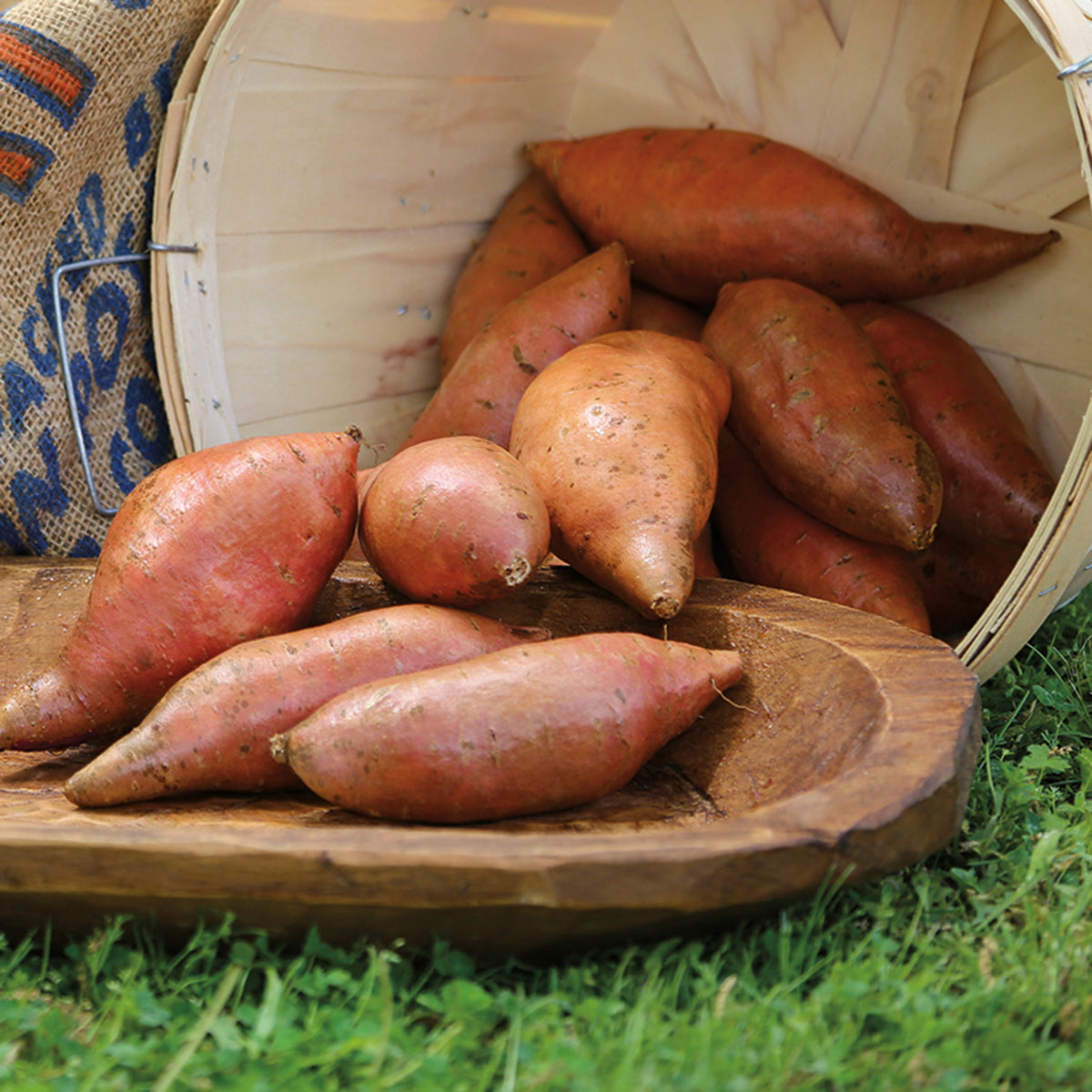
The storage roots develop smooth golden-yellow skin that can deepen in color after harvest, surrounding vivid orange to reddish-orange flesh. The roots are generally oval and uniform, while the plant itself is especially distinctive, producing attractive purple foliage that gradually becomes greener as the season progresses.
Plant Habit
Vardaman is a compact, bush-type sweet potato with considerably shorter growth than conventional vining varieties. This makes it particularly useful where garden space is limited. Its attractive foliage also gives the plant ornamental appeal while the roots develop underground.
Maturity
Vardaman generally matures in approximately 100–110 days, depending on growing conditions. Some growing guides list it at approximately 100 days, while other sources place it closer to 110 days.
Yield
Vardaman is capable of producing good to high yields of smooth, oval roots. Clemson Extension specifically notes that it produces high yields and that the roots separate easily from the plant at harvest, which can make digging and harvesting more convenient.
Disease Resistance
Vardaman has some resistance to Fusarium wilt, but it is susceptible to soil insects and nematodes. Because disease and pest performance can vary with soil conditions, proper crop rotation and well-drained soil are especially important when growing this variety.
History
Vardaman takes its name from Vardaman, Mississippi, a community widely known for its sweet potato production and recognized as the “Sweet Potato Capital of the World.” The variety is closely associated with the region and is notable for combining desirable eating quality with a compact, bush-type growth habit. Mississippi State
University identifies the nearby Pontotoc Ridge-Flatwoods Branch Experiment Station as an important center for sweet potato research and as the birthplace of the home-gardener-friendly Vardaman variety.
Best Uses
Vardaman is particularly well suited to baking, roasting, frying, grilling, and fresh eating. Its firm flesh holds its shape well during cooking, making it especially versatile for recipes where a sweet potato with good structure is desirable.
Growing Tips
Vardaman is an excellent choice when garden space is limited. Plant slips after the soil has warmed thoroughly and provide full sun in loose, well-drained soil. Avoid excessive nitrogen, which can encourage foliage growth at the expense of storage-root development. Because sweet potatoes are warm-season crops, protect young plants from cool temperatures and allow the roots adequate time to size before harvest.
Vardaman At a Glance
Type: Bush / Compact Maturity: 100–110 days Skin Color: Golden yellow Flesh Color: Deep orange to reddish-orange Flavor: Sweet and rich Texture: Firm and smooth Root Shape: Smooth, oval Plant Habit: Compact, bush-type Yield: High Best Uses: Baking, roasting, frying and fresh eating Disease Resistance: Some Fusarium wilt resistance Standout Feature: Excellent flavor in a compact, space-saving plant
Product Details
Pairs well with
Sweet Potato, Vardaman