




Sweet Potato, Vineless Porto Rico
Classic Flavor from a Sweet Potato Legend
Porto Rico is a historic American sweet potato prized for its rich flavor, moist texture, and exceptional baking quality. Once one of the dominant sweet potato varieties grown in the United States, Porto Rico played a major role in the development of the moist, orange-fleshed sweet potatoes that became popular with American consumers. Its copper-colored skin and salmon-colored flesh give it a distinctive appearance and old-fashioned character that continues to appeal to gardeners and sweet potato enthusiasts.
Flavor & Texture
Porto Rico is valued for its sweet, rich flavor and moist, creamy texture. When baked, the flesh becomes soft and tender with a complex flavor that has long been considered one of the variety's greatest strengths. LSU AgCenter publications specifically identify Porto Rico as one of the older varieties considered by many to be among the best tasting when baked.
Appearance
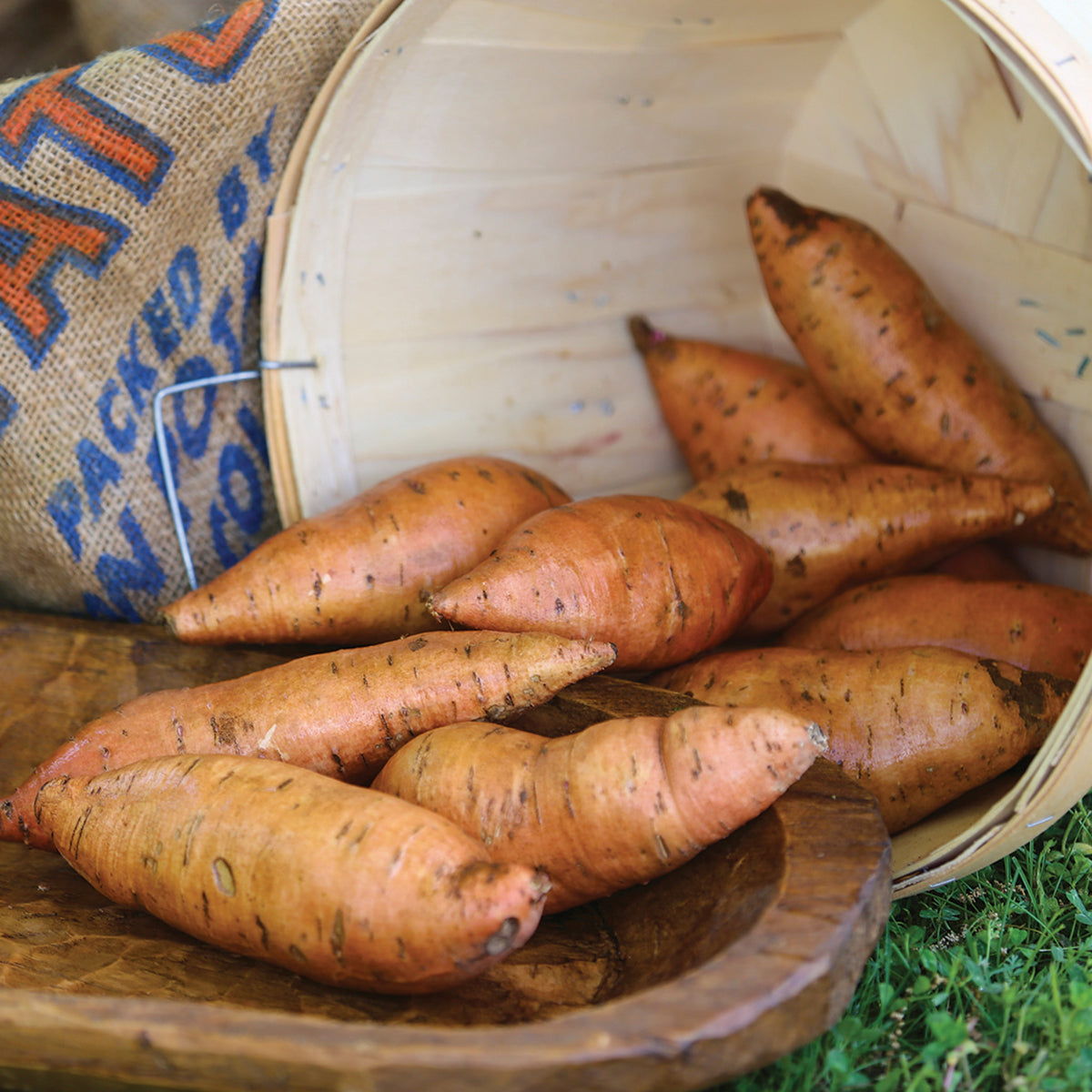
The roots typically develop copper-colored skin with salmon-colored flesh. Root shape can vary considerably, ranging from spindle-shaped roots to shorter, more rounded forms depending on growing conditions.
Plant Habit
Porto Rico produces a vigorous plant with heavy early foliage production. Unlike many newer varieties bred specifically for efficient commercial production, Porto Rico puts substantial energy into vine and foliage growth before developing its storage roots.
Maturity
Porto Rico is a late-season sweet potato, with roots developing later in the growing season than many modern cultivars. NC State classifies it as a late-harvesting variety and notes that it produces high amounts of plant growth early in the season.
Yield
Porto Rico produces below-average yields compared with modern sweet potato varieties. Its lower productivity is one reason it has largely been replaced in commercial production by newer cultivars offering higher yields, improved disease resistance, and shorter production seasons. For home gardeners, however, its traditional flavor remains a compelling reason to grow it.
Disease Resistance
Porto Rico is an older variety with limited disease resistance. It is susceptible to Fusarium wilt and Streptomyces soil rot and has an intermediate to susceptible reaction to southern root-knot nematode. LSU AgCenter records also classify it as susceptible to sclerotial blight, while its reaction to Fusarium root rot is rated intermediate to resistant.
History
Porto Rico has an important place in American sweet potato history. It was the dominant sweet potato variety in the United States during the 1930s through the 1950s. An improved selection, N.C. Porto Rico 198, was released by North Carolina State University in 1966. This selection provided more uniform orange flesh and higher beta-carotene while retaining the moist, creamy texture, sweetness, and complex flavor associated with the original Porto Rico type.
Porto Rico was also instrumental in the development of the Louisiana sweet potato industry. The LSU AgCenter's Unit 1 Porto Rico, developed by sweet potato breeder Julian C. Miller, helped establish the orange-fleshed, moist-textured style that became increasingly popular with American consumers.
Best Uses
Porto Rico is particularly well suited to baking, roasting, mashing, casseroles, and traditional sweet potato recipes. Its moist, creamy flesh and rich flavor make it especially appealing when the sweet potato itself is the star of the dish.
Growing Tips
Plant Porto Rico slips after the soil has warmed thoroughly and give the plants full sun and loose, well-drained soil. Because this is a late-season variety, allow plenty of time for the storage roots to develop before harvest. Avoid excessive nitrogen, which can encourage additional vine growth without necessarily increasing root production. Harvest carefully to prevent bruising, then cure the roots properly to improve eating quality and storage life.
Porto Rico At a Glance
Type: Historic, traditional variety Maturity: Late season Skin Color: Copper Flesh Color: Salmon to orange Flavor: Sweet, rich and complex Texture: Moist, creamy and tender Root Shape: Variable, often spindle-shaped Plant Habit: Vigorous with heavy early foliage Yield: Below average Best Uses: Baking, roasting, mashing and traditional recipes Disease Resistance: Limited Standout Feature: Classic old-fashioned flavor and excellent baking quality
Product Details
Pairs well with
Sweet Potato, Vineless Porto Rico