




Sweet Potato, White Yam
Sweet, Dry & Distinctively Different
White Yam is a classic heirloom sweet potato with a striking appearance and a flavor all its own. Unlike the moist orange-fleshed varieties that dominate today's gardens and markets, White Yam produces light-colored skin and creamy-white flesh with an exceptionally dry, starchy texture. Its unusual combination of sweetness and dryness makes it especially popular for frying, roasting, and other cooking methods where a firm, mealy texture is desirable.
Flavor & Texture
White Yam has a sweet, rich flavor with a distinctly starchy, dry texture. The flesh is noticeably drier than most orange-fleshed sweet potatoes, giving it a firm, flaky quality when cooked. Some growers report that the roots become sweeter during storage, allowing the flavor to continue developing after harvest.
Appearance
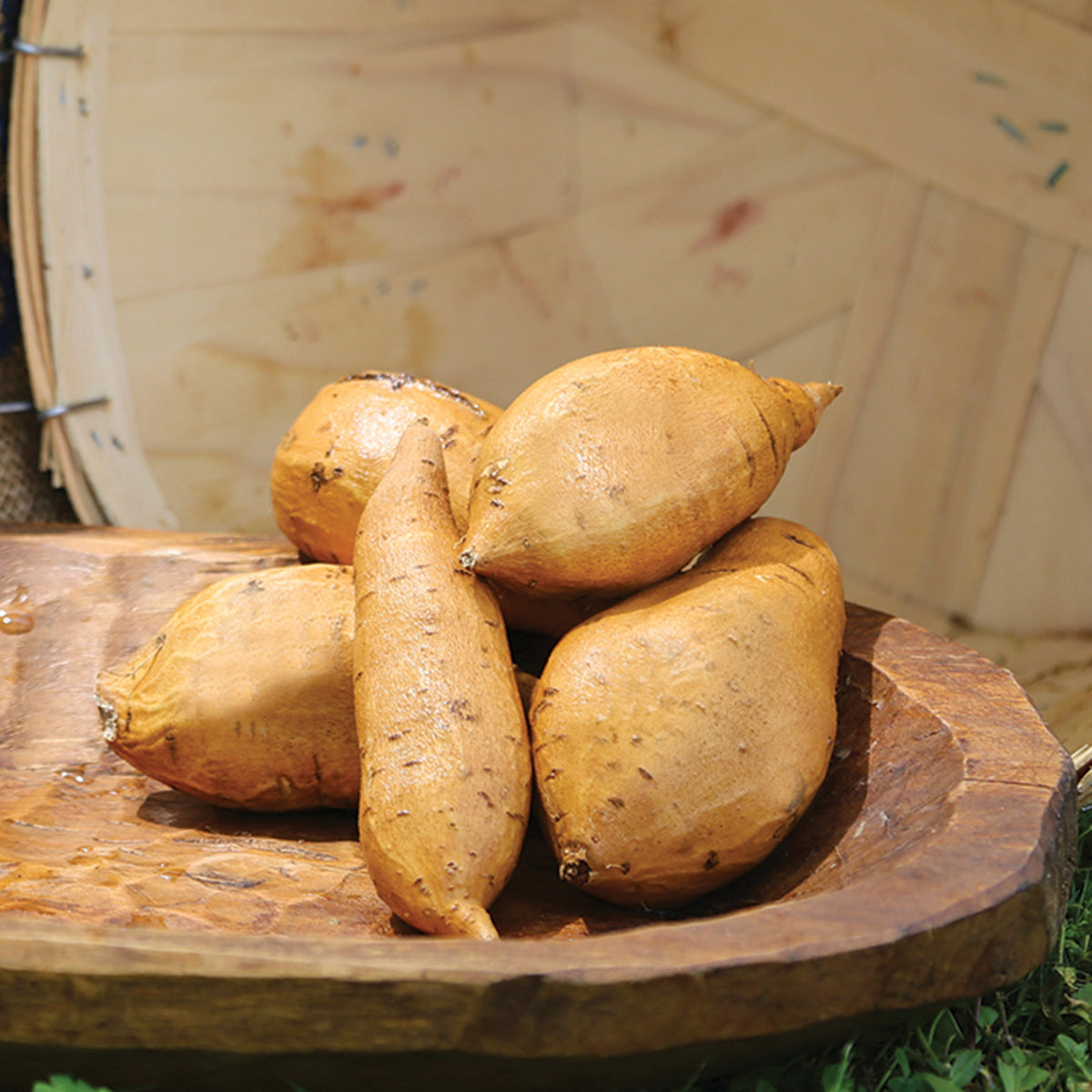
The roots are distinguished by their light tan to white skin and white to creamy-white flesh. The roots are generally elongated, with individual roots commonly reaching substantial lengths under good growing conditions.
Plant Habit
White Yam produces vigorous, vining plants with normal sweet potato foliage. Unlike compact bush varieties such as Vardaman, it benefits from adequate garden space where its vines can spread freely.
Maturity
White Yam is generally considered a mid- to late-season variety, with maturity estimates ranging from approximately 100 to 120 days, depending on growing conditions and the source of planting stock. For northern gardens, allowing the plants a full season is recommended to achieve good-sized storage roots.
Yield
White Yam can produce good to above-average yields, although results vary considerably with growing conditions. Trials have shown it capable of producing well, while other trials have found its yield below that of leading commercial varieties. Its primary appeal is its distinctive eating quality rather than maximum production.
Disease Resistance
White Yam has limited documented disease resistance. Cornell's Vegetable Varieties for Gardeners specifically notes susceptibility to scurf. As with other sweet potatoes, planting in well-drained soil and rotating crops can help reduce disease pressure.
History
White Yam is considered an old American sweet potato variety and has been grown for generations as a distinctive white-fleshed alternative to orange varieties. It is also associated with several historical names, including White Triumph, Southern Queen, White Bunch, and Choker. The name "yam" in this context refers to the traditional
American practice of calling certain sweet potatoes "yams"; botanically, White Yam is still a sweet potato, Ipomoea batatas, rather than a true yam.
Best Uses
White Yam is particularly well suited to frying, roasting, baking, and mashing. Its low-moisture flesh holds its structure well during cooking and gives fried and roasted preparations a firm, satisfying texture. Its unusual white appearance also makes it an excellent choice for gardeners looking to grow something different from the standard orange-fleshed sweet potato.
Growing Tips
Plant slips after the soil has warmed thoroughly and provide full sun and loose, well-drained soil. Give the vigorous vines plenty of room to spread, and avoid excessive nitrogen, which can promote foliage at the expense of storage-root development. Allow the roots to reach good size before harvest, then cure them properly. Because White Yam has a naturally dry texture, proper curing and storage can help develop its sweetness and improve its eating quality.
White Yam At a Glance
Type: Heirloom / Traditional Maturity: 100–120 days Skin Color: White to Light Tan Flesh Color: White to Creamy White Flavor: Sweet, Rich & Starchy Texture: Very Dry, Firm & Flaky Root Shape: Long, Elongated Plant Habit: Vigorous, Vining Yield: Good to Above Average Best Uses: Frying, Roasting, Baking & Mashing Disease Resistance: Limited; susceptible to scurf Standout Feature: Exceptionally dry, sweet white flesh
Product Details
Pairs well with
Sweet Potato, White Yam